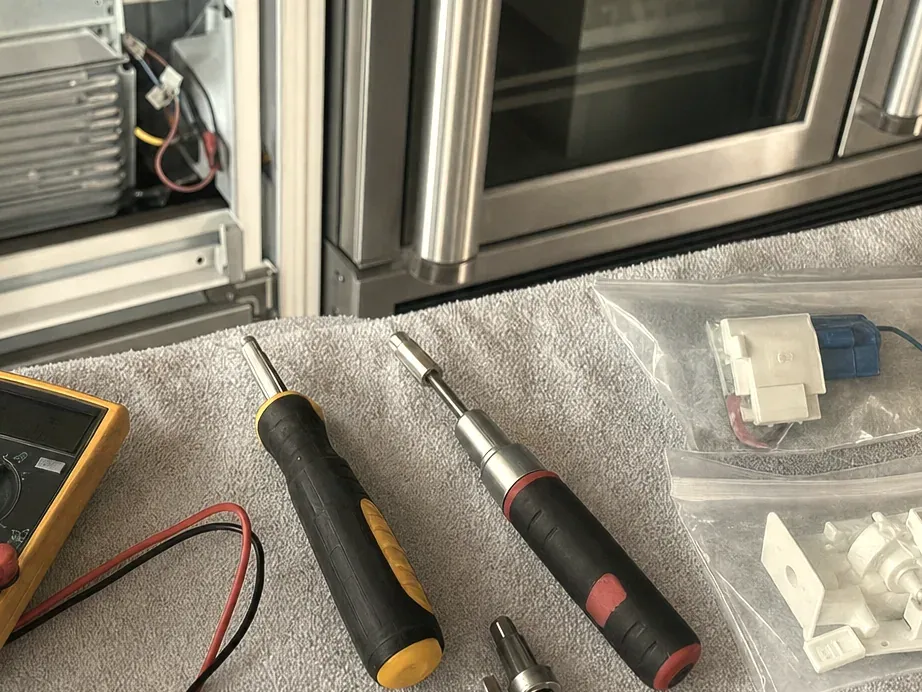
A refrigerator sweats on the outside when warm, moist room air touches a part of the cabinet that has dropped below the air’s dew point, so the moisture turns into beads the way it does on a glass of iced tea. On a healthy unit that should almost never happen, because the doors seal tightly and small heaters keep the front edges just warm enough to stay dry. So when you find droplets along a door edge, on the divider between the doors or down the side panels, the fridge is usually telling you one of three things: cold air is escaping past a seal, a door is not fully closing, or one of those heaters has stopped working. In Castle Rock, where the air is normally dry at about 6,200 feet, exterior sweat is a stronger warning sign than it would be in a muggy coastal kitchen.
Why a dry climate makes sweat a better clue
Condensation needs two things: moisture in the air and a surface cold enough to pull it out. Most days on the Front Range the indoor humidity is low, so a sound refrigerator has a wide margin. When a Sub-Zero in The Meadows or Crystal Valley Ranch starts beading anyway, look first for a local source of moisture: a whole-house humidifier running hard in January, a dishwasher venting steam beside the panel, a boiling kettle, or a sticky afternoon after a summer thunderstorm. If the sweat appears only during those moments and dries within an hour, it is probably the room, not the refrigerator. If it shows up on ordinary dry days, or keeps returning in the same spot, the appliance itself is running colder on the outside than it was designed to.
Overnight the house cools, doors stay shut for hours, and any thin stream of cold air leaking past a gasket has time to chill the metal around it. A line of droplets along one edge first thing in the morning, gone by mid-morning, is a classic sign of a tired seal on that edge.
Sweat or leak: tracing where the water comes from
Before blaming condensation, make sure the water is not arriving from somewhere else. Built-in refrigerators hide several water sources behind the grille and panels, and each leaves a different trail.
- Beads spread evenly across a door face or side panel: true condensation, formed right where it sits.
- A puddle under the front grille: often the defrost drain. Frost melts off the evaporator during each defrost cycle and runs down a tube to a pan near the compressor, where it evaporates. If the tube clogs or the pan cracks, that meltwater spills forward instead.
- Water inside the fresh-food section, pooling under the crispers: usually a frozen or blocked defrost drain backing up into the cabinet.
- A slow drip near the bottom or back, worse when ice is being made: suspect the water supply line, the inlet valve or a loose fitting at the ice maker.
- Wet edges on the freezer door with frost building inside: warm air is being drawn in past the gasket, freezing on the walls and melting again later.
Dry the whole area with a towel, then look again in a few hours. Water that comes back along one narrow path is almost always plumbing or drainage; a fine film that reappears across a wide area is sweat.
Door seals and doors that do not quite close
The gasket is the most common culprit, and it is the easiest part for an owner to inspect. Work around all four sides with a strip of printer paper, closing the door on it every few inches and drawing it back slowly. You should feel steady drag everywhere. Where the paper slides out with no resistance, cold air is leaking, and the cabinet metal next to that gap will sweat. Also look for torn corners, flattened stretches and food residue that keeps the seal from seating; a wipe with warm, mildly soapy water often restores its grip.
Doors left slightly open cause the same trouble on a larger scale. On Classic (CL) and Designer (DET, DEC) units, Sub-Zero turns the interior lights off after a door or drawer has been ajar, to cut down on extra heat; if the lights are dark, close everything firmly and wait one hour before deciding you need service. Several Sub-Zero built-in lines, the 648PRO among them, can also log EC40 with the Service indicator flashing when the freezer compressor runs too long, and a door left open is one listed cause alongside sealed-system, fan and sensor faults. Sub-Zero splits the response by how far off the readings are: under 10° above the setting, a condenser cleaning comes first; beyond 10° with every door known to have been shut, a technician is the next step; and either way the code should stay uncleared for as long as temperatures are still rising.
If a leaking seal has let heavy frost build inside, it has to be melted before a new gasket can seat properly. Sub-Zero gives two thawing methods depending on the line. Classic and Designer owners switch the unit off and sweep a hair dryer, set low, across the ice without lingering; PRO Series owners get the opposite instruction, no dryer at all, only a handheld steamer.
The hidden heaters that keep the front dry
Many refrigerators run a low-wattage heater wire, often called an anti-sweat or mullion heater, just behind the steel at the divider between the doors and around the freezer opening. Its only job is to hold that metal a few degrees above the room’s dew point. When the wire breaks or its connection fails, the seal can be perfect and you will still see a neat stripe of moisture right down the middle of the cabinet. That pattern, narrow and centered on the divider, points away from the gasket and toward the heater or the control that powers it. This is not a safe owner repair, because it means removing trim and working close to live wiring.
Condensation on the back or the cabinet sides
Moisture at the back of a built-in is less common, since the machine compartment usually sits above or below the cabinet and breathes through the grille. If you find damp panels or a warm, tacky feel around the grille, the condenser may be packed with dust and the compressor may be running hot and long. Signs a refrigerator is overheating include a grille that feels hot rather than warm, a compressor that seldom shuts off, and food that never quite reaches the set temperature. According to Sub-Zero, condenser cleaning is unnecessary on anything installed within the last 6 months, and once the fresh-food side climbs past 48 degrees with the control at 38, a cleaning by itself is unlikely to bring it back, so that is the moment to call. Our guide to checking the right freezer temperature shows how to confirm those readings before you pick up the phone.
What it costs and when to call
Start with the free checks: the paper test, a seal wipe, door alignment, the interior lights, and a towel-dry to separate sweat from a leak. If the moisture returns on dry days, or you also see frost, a puddle or rising temperatures, it is time for a visit from our Castle Rock refrigerator repair team.
Typical ranges, with the firm figure given once the fault is diagnosed:
- Door gasket or seal replacement: $280–$610
- Defrost heater, thermostat or sensor: $300–$600
- Evaporator or condenser fan motor: $340–$750
- Ice maker, water valve or supply line: $280–$790
The first line on any estimate is the $89 service call, which covers the technician’s trip to your door and a thorough diagnosis; the whole $89 is credited once you approve the work. The repair cost breakdown covers the other repairs in more detail. To book anywhere from Founders Village and Red Hawk to Castlewood Ranch and Downtown Castle Rock, call Square Deal Refrigeration at (720) 605-5234.
Questions
Why is my fridge sweating on the outside in the morning?
Overnight sweat usually means a thin stream of cold air is slipping past one section of door gasket. With the doors shut for hours and the house cooling down, the metal beside that gap chills enough to collect moisture. Test that edge with a strip of paper; if it slides out freely, the seal needs cleaning or replacing.
How do I stop condensation on the outside of my freezer?
Make sure the freezer door closes fully and its gasket grips evenly, because most exterior freezer sweat starts with cold air leaking past the seal. Clean the gasket, check that nothing on the shelves holds the door open, and turn down any humidifier nearby. If moisture keeps forming on dry days, the frame heater may have failed.
Is condensation on the back of a fridge a problem?
Damp panels at the back or around the grille deserve attention, because they often mean the condenser is clogged and the compressor is running hot. Built-in units breathe through the grille, so dust there matters. Clean it if the unit is older than 6 months, and call for service if the inside stays well above its setting.
How can I tell if my refrigerator is overheating?
An overheating refrigerator usually has a grille that feels hot to the touch, a compressor that almost never cycles off, and food that drifts warmer than the setting. A dusty, scorched smell near the vents is another clue. These signs point to a dirty condenser or a failing fan, which a technician can confirm with a quick diagnosis.
Why is my fridge sweating on the inside?
Interior sweat usually comes from warm, humid air getting in through a door left open, a worn gasket, or hot food put away uncovered. A blocked defrost drain can also leave water pooling under the crispers. Check the seals and the drain first; if the walls keep beading after that, have the unit inspected.